
The Short Answer
Yes. A roof inspection in winter works as long as the roof isn't buried in snow or coated in ice. A roofer can check the edges, flashing, vents and gutters, and the attic often shows the most in cold weather. Moose Roofing does free roof inspections across Omaha, Lincoln and Council Bluffs all winter.
Can You Get a Roof Inspection in Winter?
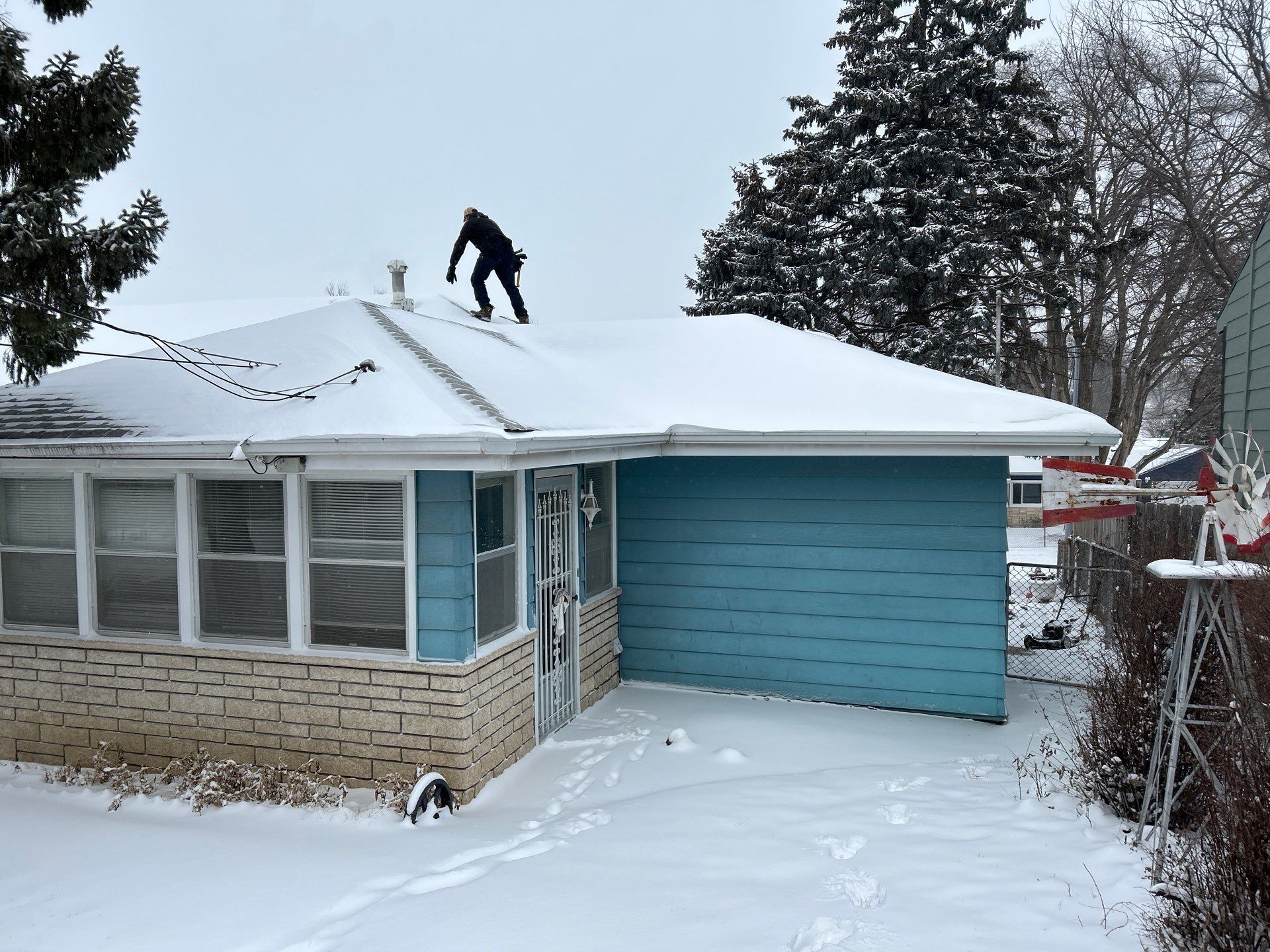
Yes. Cold weather alone doesn't stop a roof inspection in winter. What matters is what's on the roof. A dry or lightly dusted roof can be checked much like it would be in fall. A roof under several inches of snow or a layer of ice limits what anyone can see from above.
Even then, a winter inspection isn't wasted. A lot of roof problems leave clues at the edges, in the gutters and inside the attic, and winter is when some of those clues are easiest to spot.
What Can a Roofer See When There's Snow on the Roof?
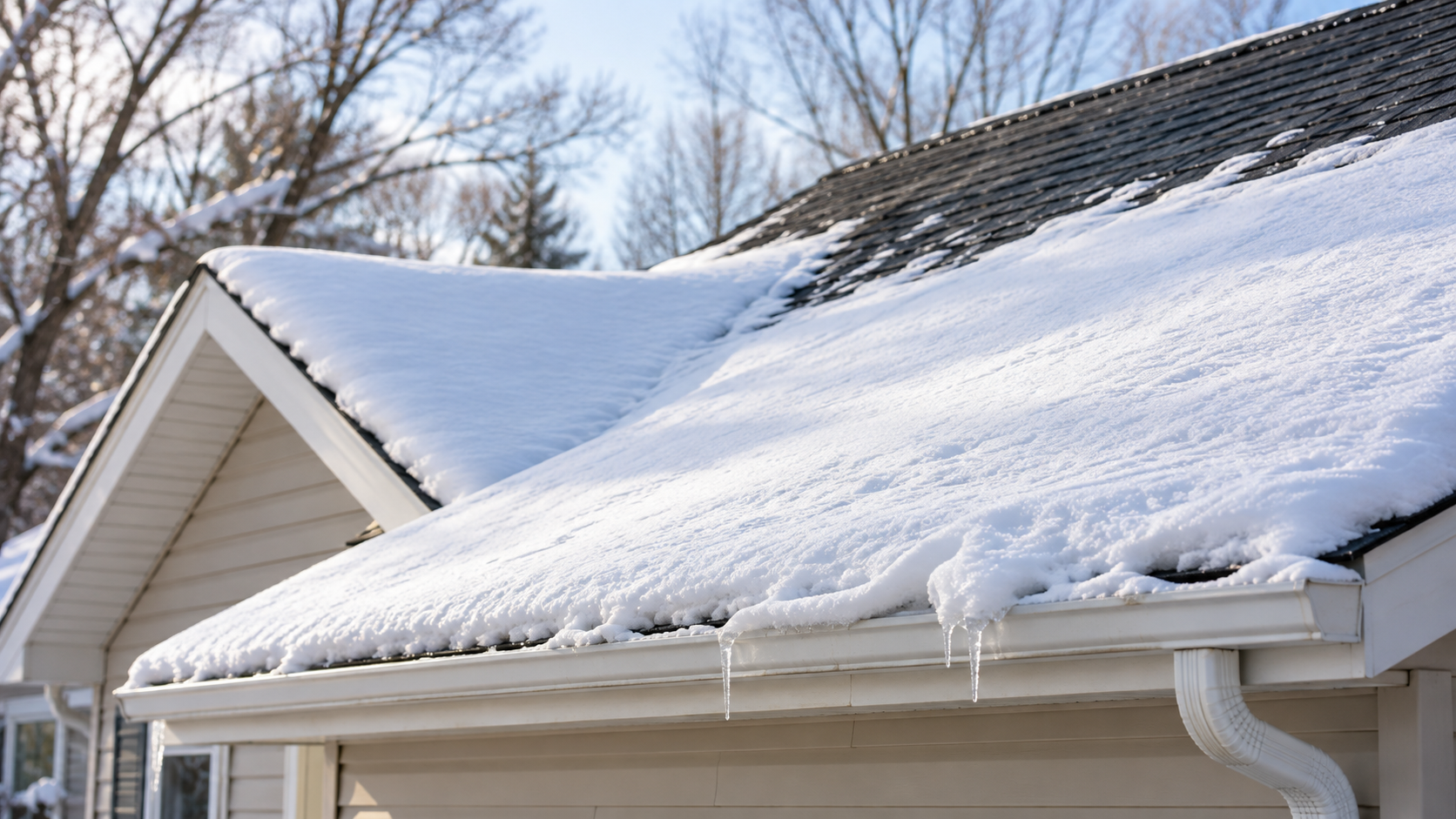
More than you might think. Snow usually melts first from the south side and along the eaves, and ladder access at the edges gives a close look at:
- Shingle edges, drip edge and the first few courses above the gutter
- Flashing around chimneys, walls and skylights
- Pipe boots and roof vents
- Gutters and downspouts, including dents and granules collecting in the gutters
- Ice buildup and icicle patterns that point to heat loss
Snow itself can be a clue. Bare patches on an otherwise white roof often show where heat is escaping from the attic. Home inspector Reuben Saltzman of Structure Tech explains that inspectors can't see a fully snow-covered roof, but ladder views at several spots along the edge can still reveal serious problems.
Why Is the Attic So Important in a Winter Inspection?
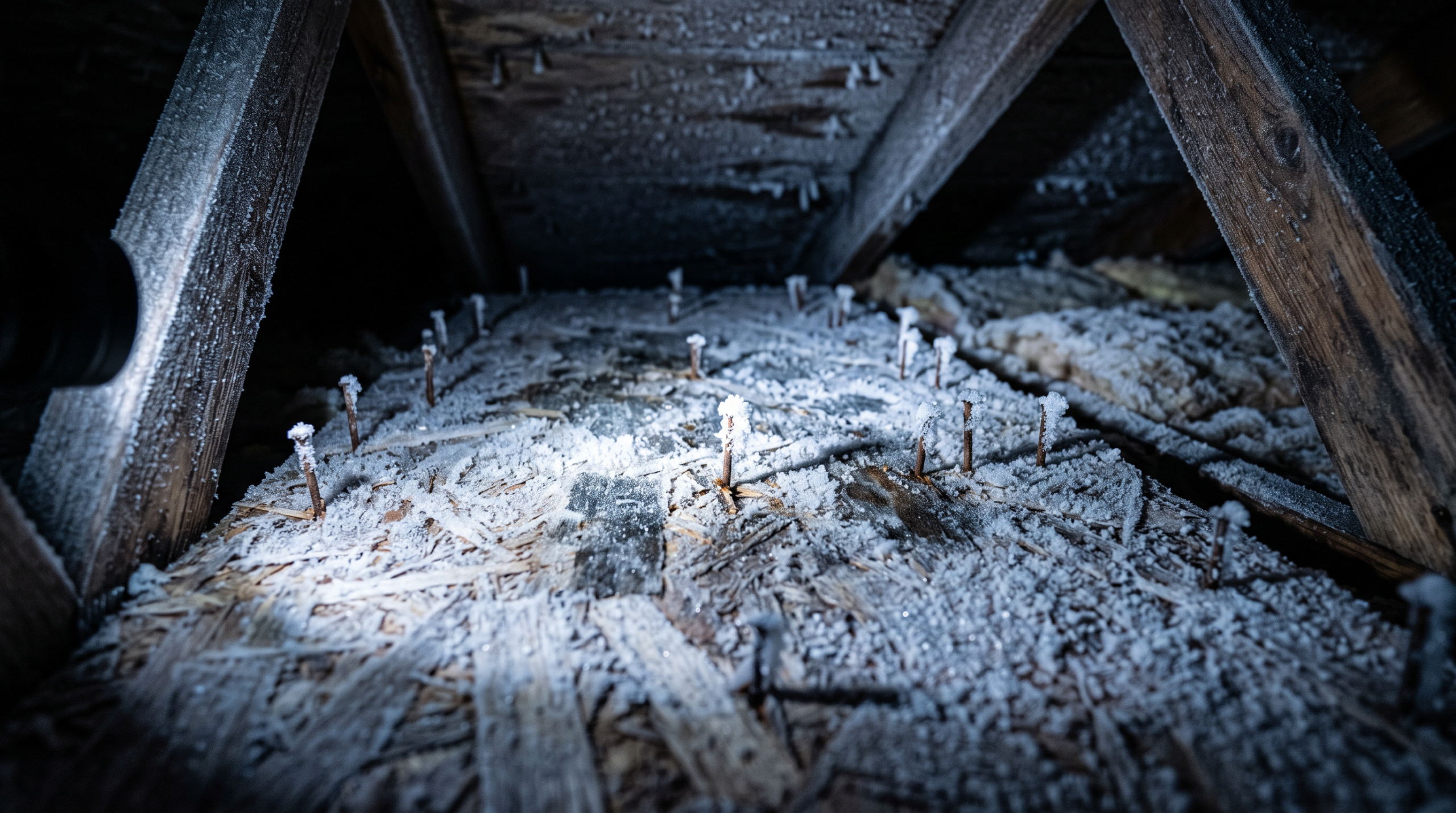
In cold weather, the attic shows how the roof is really performing. Warm, moist air from the house meets the cold roof deck, and any problems with ventilation, insulation or leaks become visible. A roofer looks for:
- Frost on attic nails and the underside of the roof deck
- Wet, matted or stained insulation
- Water stains or drips along rafters
- Daylight showing through the roof deck
- Blocked soffit vents or missing baffles
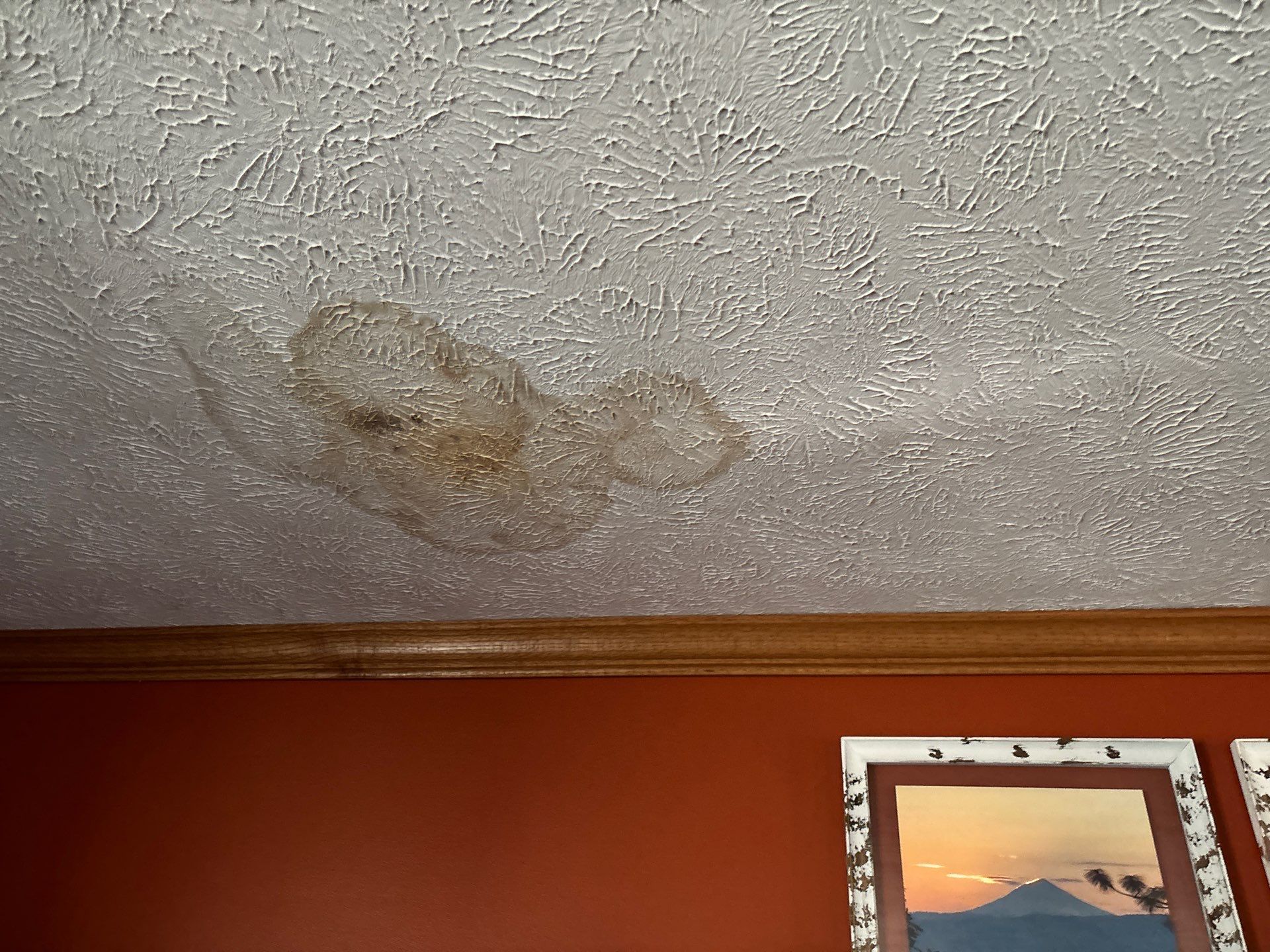
These are the problems that turn into ceiling stains, ice dams and rotted decking by spring. Our guide to how different roof vents work covers what a healthy attic should look like.
When Should a Winter Roof Inspection Wait?
Sometimes the safe answer is to wait a few days. A roofer should hold off on getting up on the roof when it's iced over, when winds are high, or when deep snow hides the surface completely. Cold asphalt shingles are also stiffer and easier to crack under foot traffic, so a good crew limits walking on a frozen roof.
Don't clear the snow off yourself to get the roof ready. Shovels and boots can damage shingles, and climbing a snowy roof is dangerous. If snow needs to come off, see when snow should be removed from a roof.
Buying a Home in Winter? What to Do About a Snow-Covered Roof
A snow-covered roof is one of the most common limits on a winter home inspection. If the inspector can't see the roof, the report will usually say so. You have a few options:
- Ask for a roofer to inspect the edges, flashing and attic now, and for a follow-up look after the snow melts.
- Ask the seller for the roof's age, any repair records and past insurance claims.
- Talk to your agent about holding back money at closing until the roof can be inspected. A Daily Herald home inspection column describes buyers and sellers agreeing to hold part of the seller's proceeds in escrow until the weather allows a full inspection.
What Problems Should Prompt a Winter Inspection Now?
Don't wait for spring if you notice any of these:
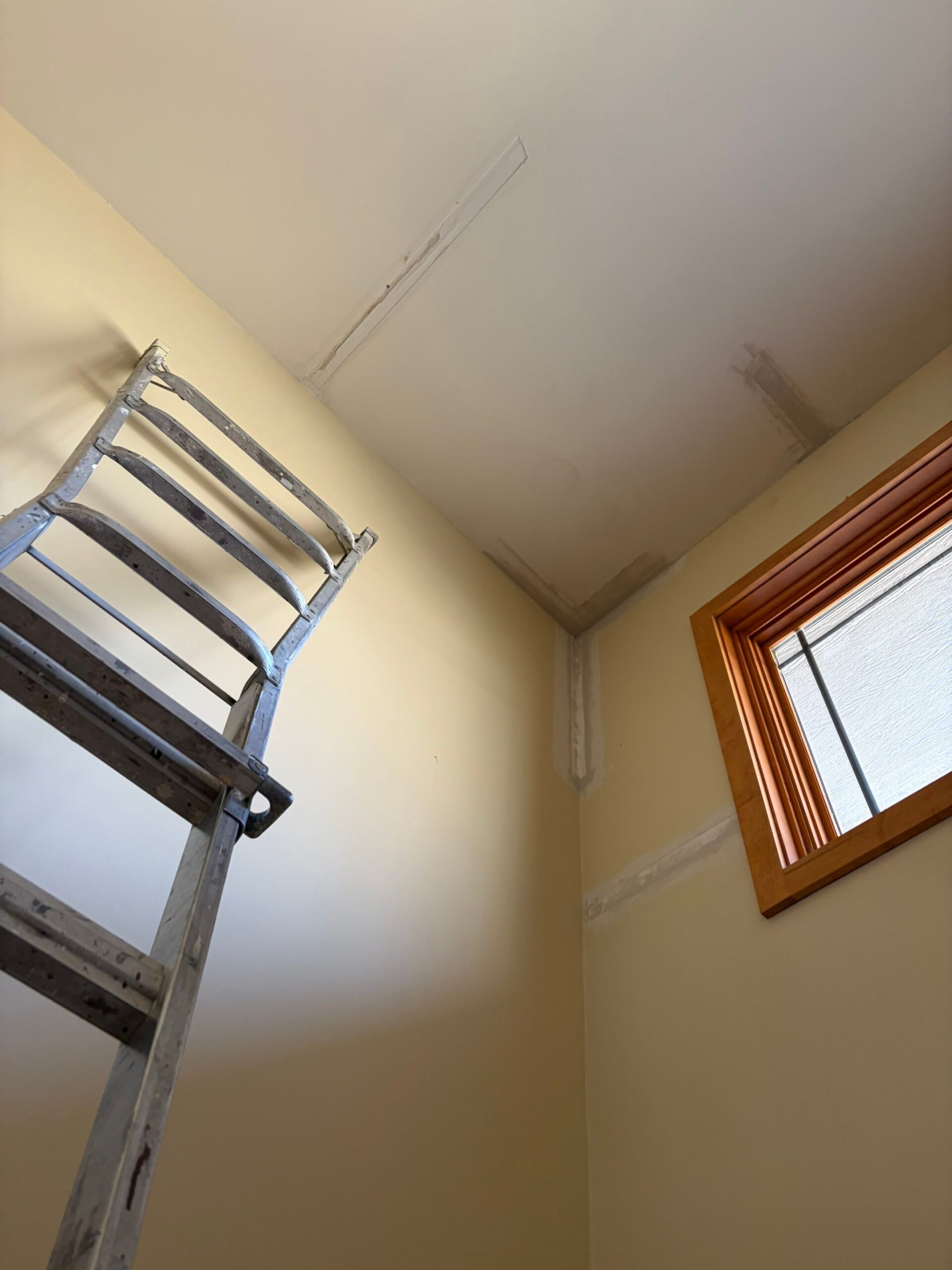
- A ceiling stain, drip or wet insulation. Here's what to do when your roof is leaking.
- Ice dams or heavy icicles forming along the eaves
- Shingles in the yard after a windstorm
- Dented gutters or vents from a fall hailstorm you haven't had checked yet
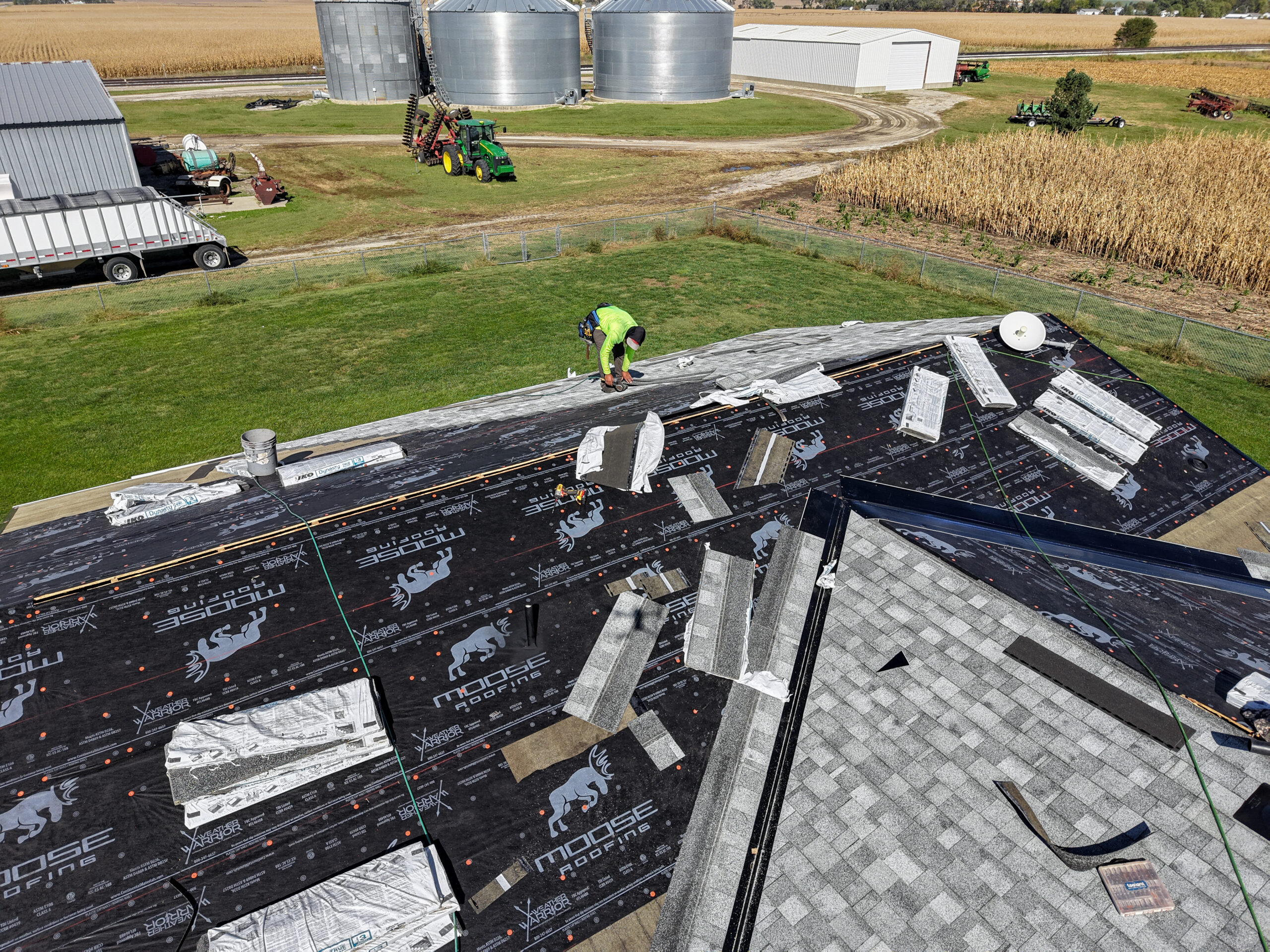
Small leaks get bigger with every freeze and thaw. Catching them in winter often means a smaller repair now instead of replacing decking in spring. If you're planning a full replacement, read about the best time of year to replace a roof in Omaha.
The Bottom Line
A roof can be inspected in winter. Snow limits what can be seen from above, but the edges, flashing, gutters and especially the attic still tell a roofer a lot. If something looks wrong, don't wait for spring. Moose Roofing will inspect your roof for free and come back after a thaw if snow hides the shingles.