
The Short Answer
A bathroom fan venting into the attic sends warm, wet shower air straight to the cold roof deck, where it turns into frost, mold and wet insulation. Building code requires bath fans to exhaust outdoors through a roof or wall cap, not into the attic or soffit. Moose Roofing finds this in Omaha-area attics every winter.
Why Is a Bathroom Fan Venting Into the Attic a Problem?
Because the moisture doesn't leave your house. It just moves upstairs. A typical shower puts a lot of water into the air: a U.S. Department of Energy building guide estimates a half pint of water vapor for every 5 minutes of shower time. When the fan dumps that air into the attic, it lands on the coldest surfaces it can find.
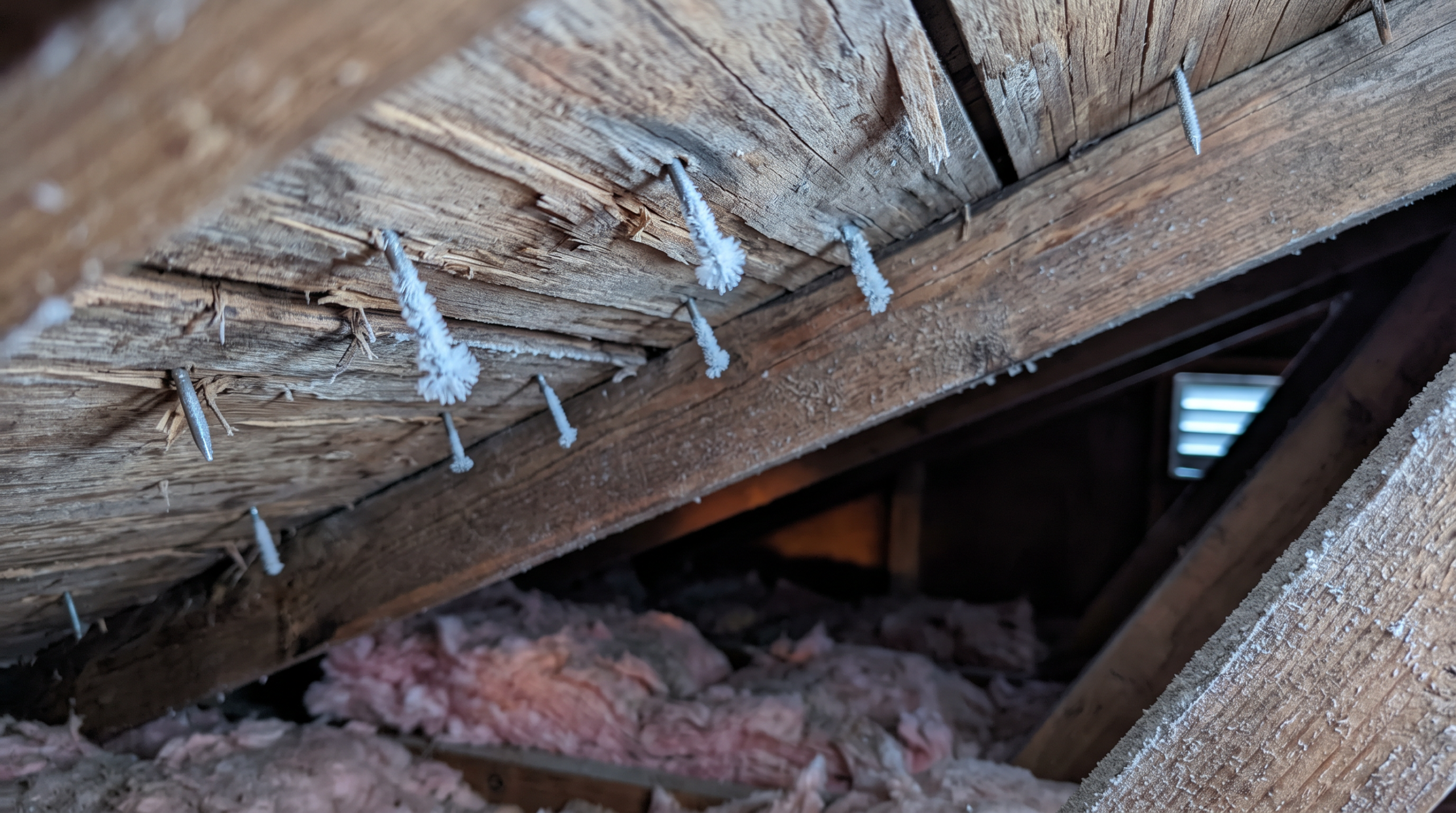
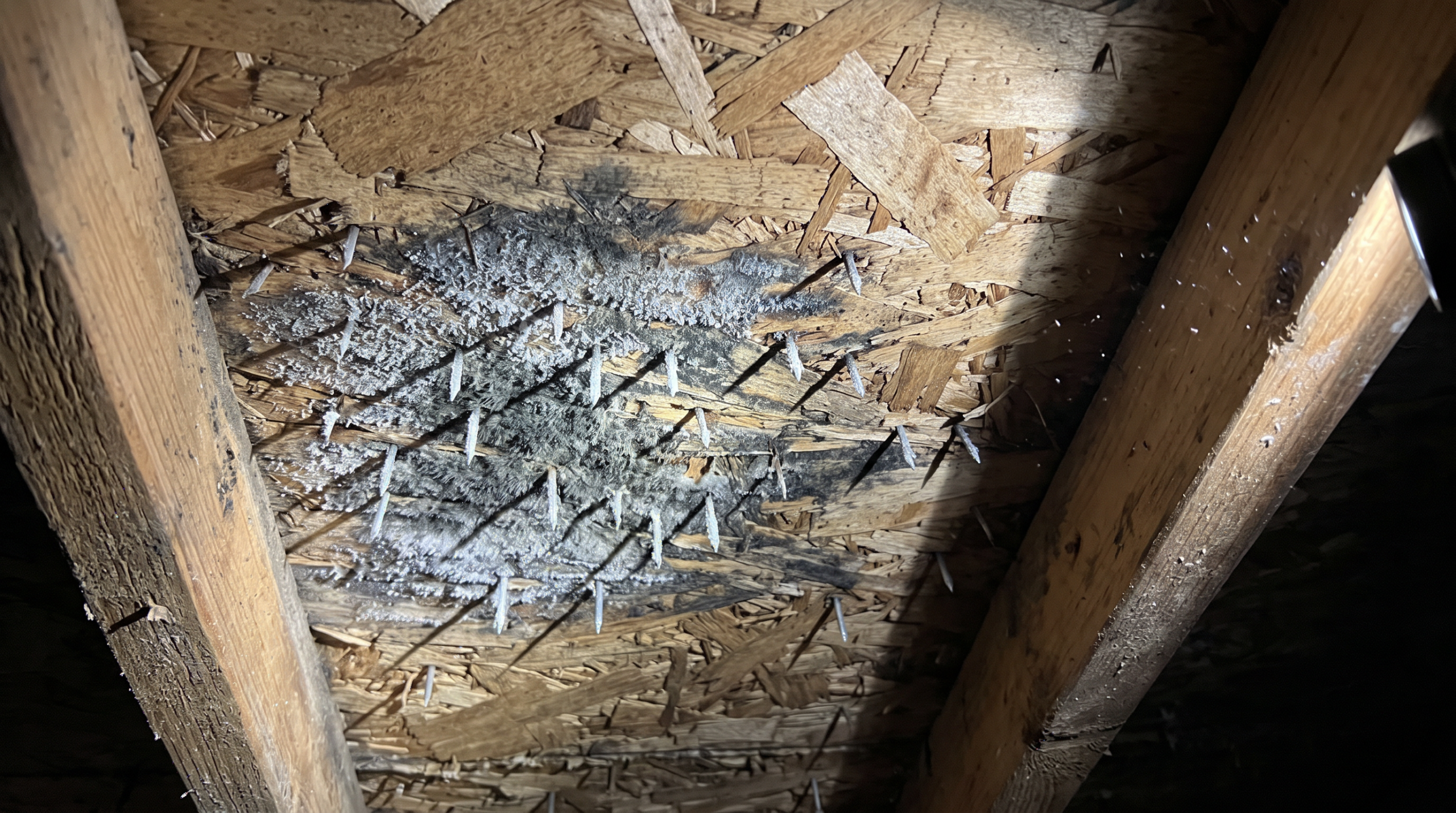
In a Nebraska winter, that's the underside of the roof deck and the nail tips poking through it. The moisture freezes into frost, then melts and drips during the next warm spell. The DOE warns that venting fans into the attic or crawl space can cause mold and rot in building materials. It's one of the most common causes of frost on attic nails.
What Does the Building Code Say About Bathroom Fan Vents?
The International Residential Code is clear. Section M1501.1 requires exhaust air to be discharged to the outdoors, and it specifically says air shall not be exhausted into an attic, soffit, ridge vent or crawl space.
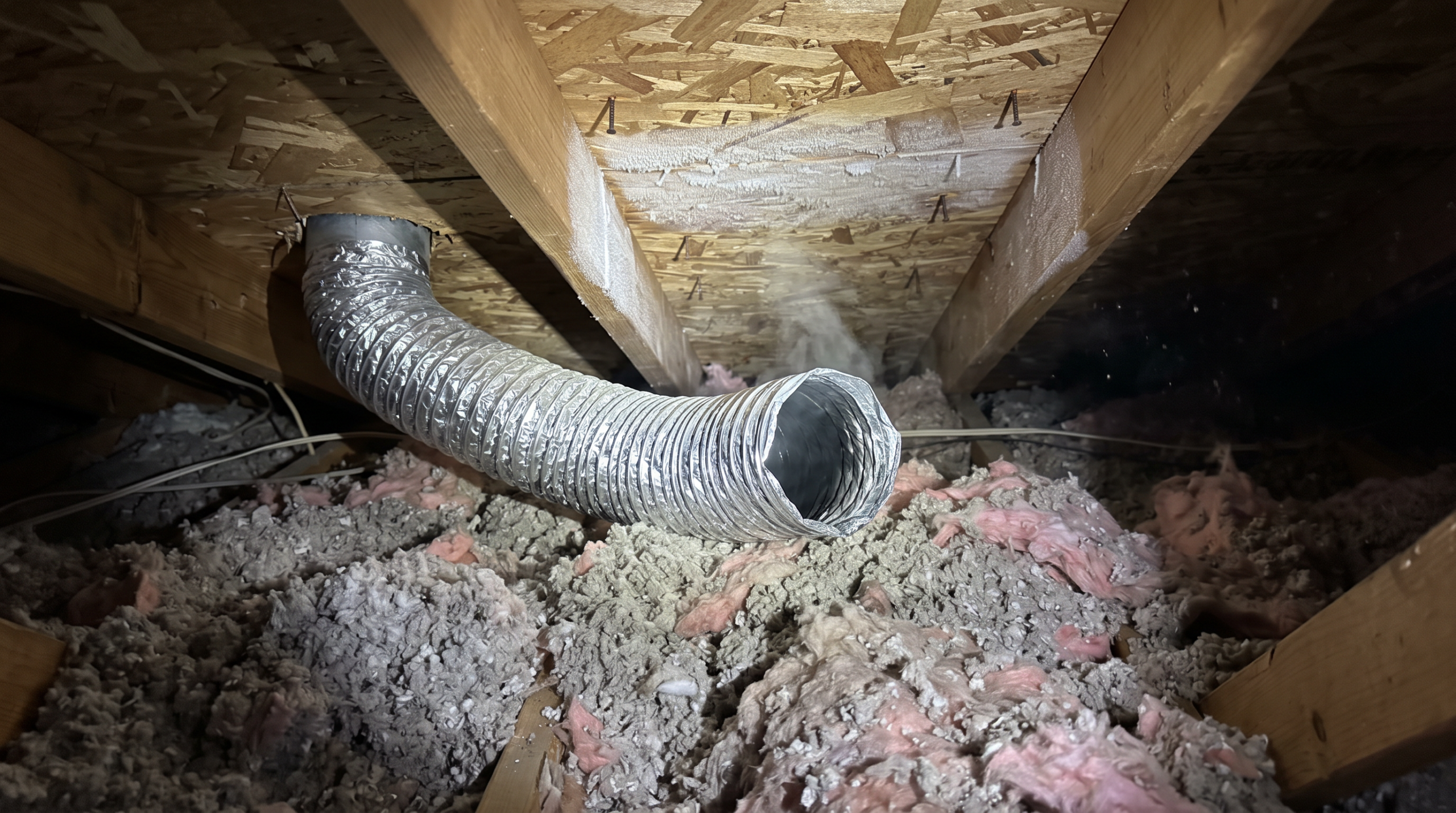
Plenty of older homes, and some newer ones, still have fans that end in the attic, either because the duct was never connected or because it came loose over time. Whatever the age of your home, a fan that dumps into the attic is worth fixing.
How Can You Tell Where Your Bathroom Fan Vents?
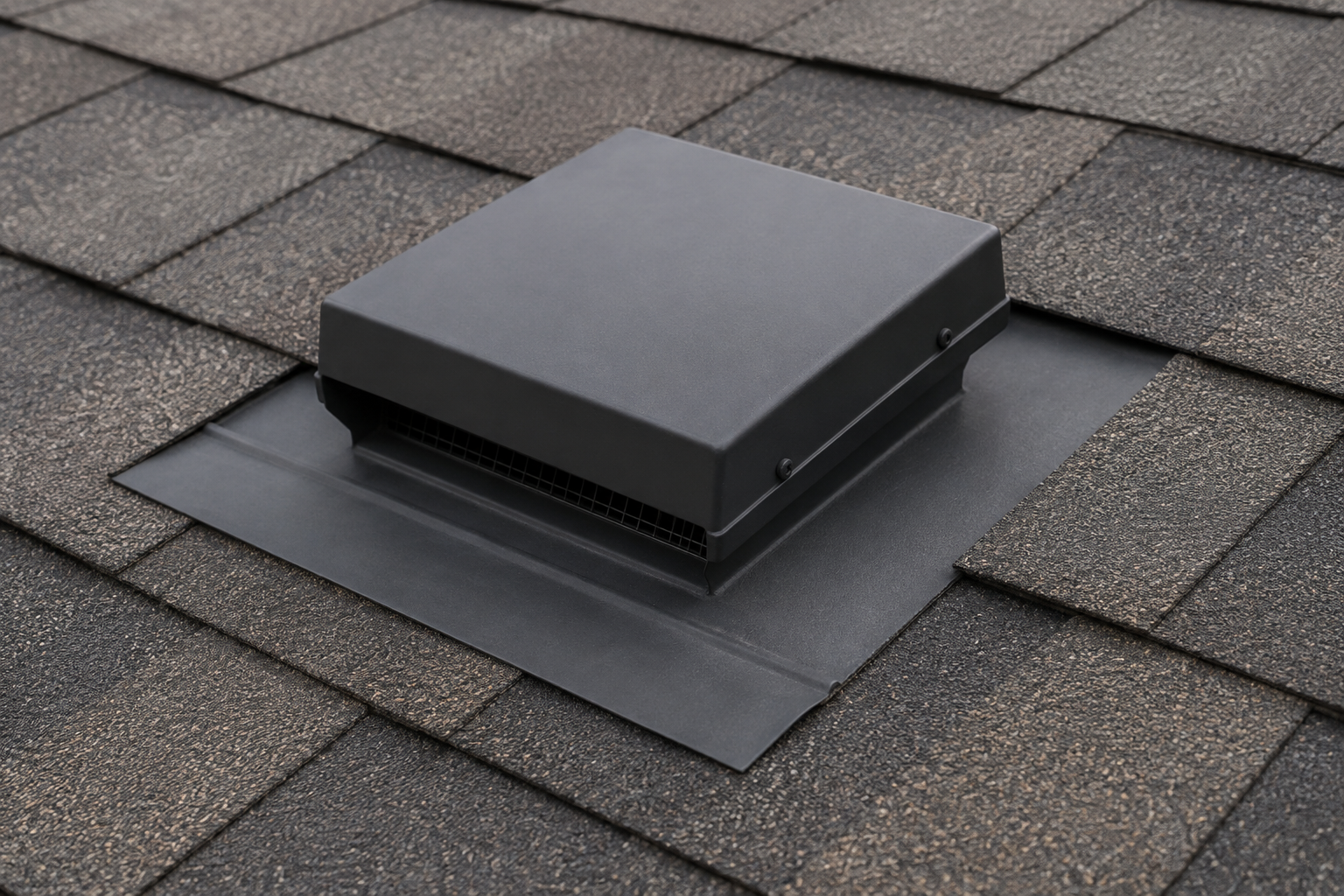
Start outside. Look for a small vent cap on the roof or a louvered hood on an outside wall near each bathroom. If you can't find one, the fan probably isn't going outside.
Then check the attic on a dry day, with a flashlight and safe footing on the joists:
- Find the fan housing above the bathroom ceiling and follow the duct.
- Make sure the duct connects tightly to a vent cap, not just pointed at a roof vent or the soffit.
- Look for a duct lying loose on the insulation, crushed, or pulled apart at a joint.
- Check the roof deck above the bathroom for frost, dark stains or mold.
Inside, watch for a fan grille that drips water in cold weather, mirrors that stay fogged long after a shower, or peeling paint on the bathroom ceiling.
Can a Bathroom Fan Vent Into the Soffit or Near a Ridge Vent?
No. Code doesn't allow either one, and for good reason. Soffit vents are where the attic pulls in fresh air. As builders' magazine JLC explains, moist air blown out through a soffit is likely to be drawn right back into the attic through the soffit vents.
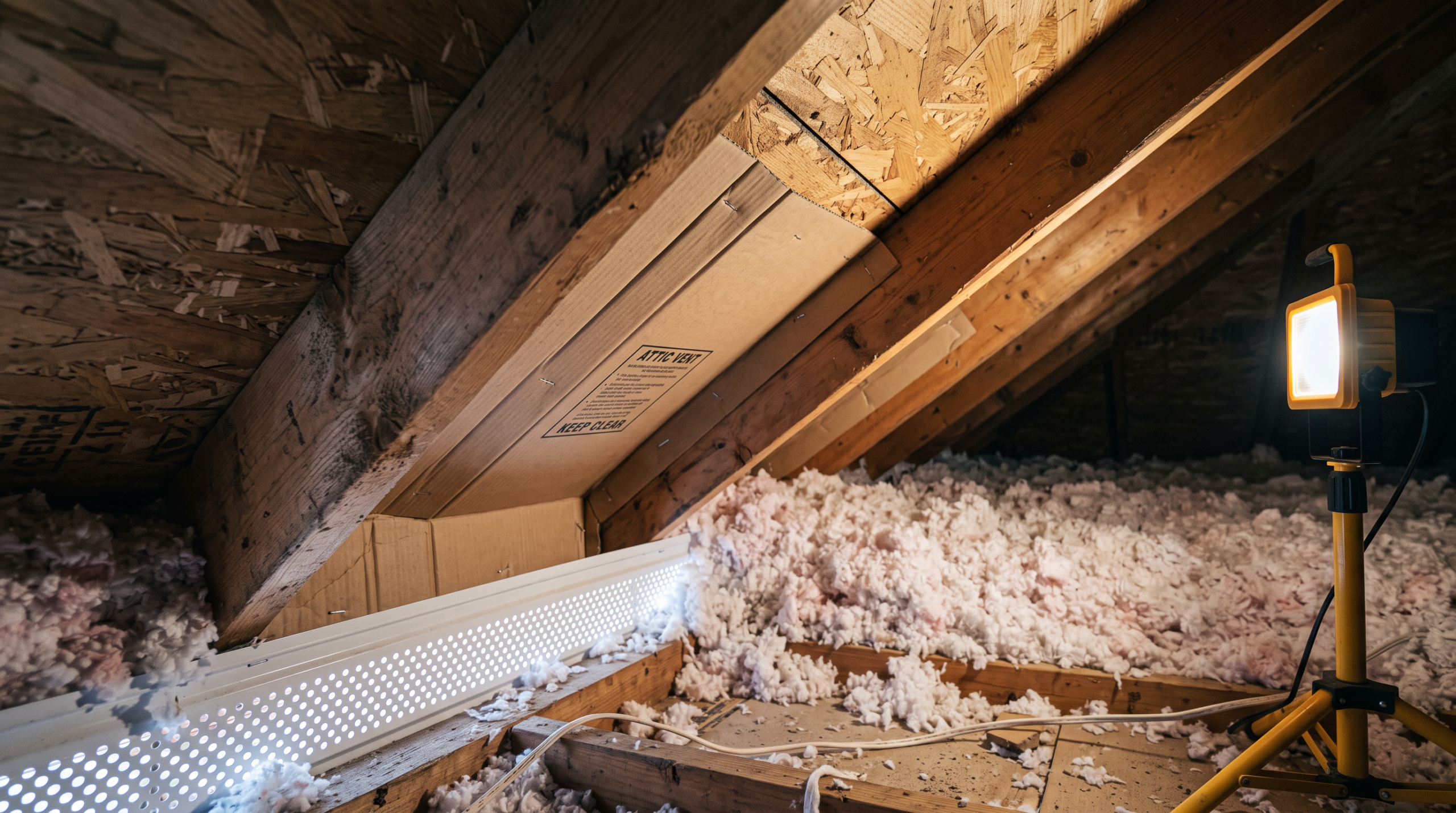
Pointing a duct at a ridge vent, box vent or gable vent has the same problem. Those vents are part of the attic's own airflow, and most of the moist air ends up in the attic instead of outside. Our guide to how different roof vents work explains how intake and exhaust are supposed to move air.
How Should a Bathroom Fan Be Vented?
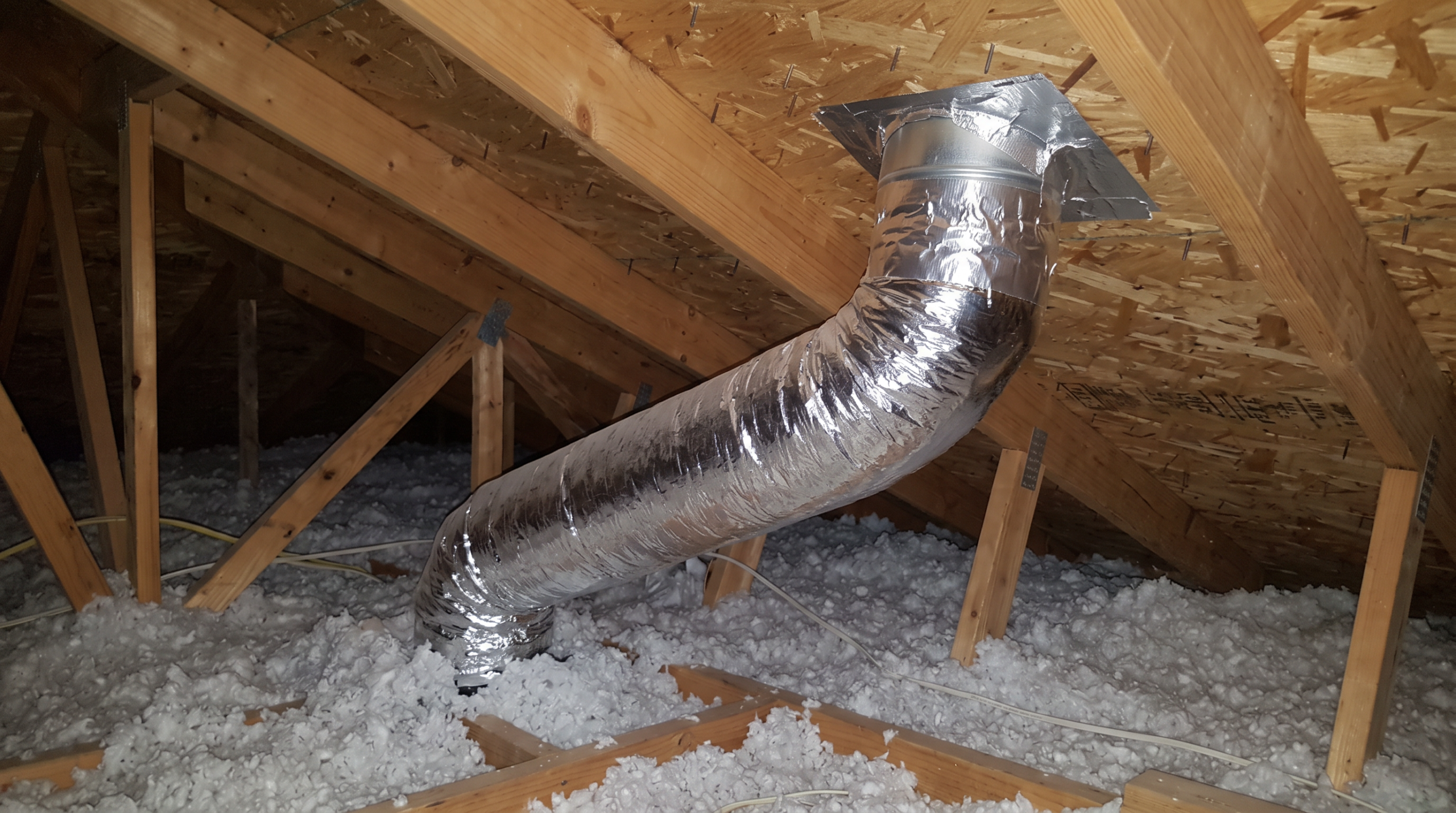
Through its own dedicated cap on the roof or an outside wall, with a duct that carries air all the way there. A good installation includes:
- A dedicated vent cap with a damper, sealed and flashed into the roof or wall so it doesn't leak.
- A short, straight duct run. The DOE's Building America Solution Center recommends smooth metal duct on the shortest, straightest path, attached to the vent with an air-sealed connection.
- Insulated duct in the attic so warm, moist air doesn't condense inside it and drip back into the bathroom.
- Sealed joints and a duct that's supported without sags or kinks.
A roof cap means cutting into the roof, so it needs to be flashed like any other roof penetration. Our attic ventilation team can install the cap and make sure the fan, duct and attic vents all work together.
How Long Should You Run a Bathroom Fan After a Shower?
About 20 minutes. JLC notes it's generally recommended to run a bath fan during the shower and for 20 minutes afterward to clear the water vapor. A timer switch makes that easy and helps dry out the duct too.
If your windows are covered in condensation all winter, the whole house may be holding too much moisture. Here's why water forms on the inside of windows.
The Bottom Line
A bathroom fan that vents into the attic only moves the moisture problem upstairs, and in winter it shows up as frost, mold and wet insulation. Every bath fan should run through an insulated, sealed duct to its own cap outside. If you're not sure where yours goes, Moose Roofing will check your attic for free.